Croitorov, Döhring, Maier, Mc Morrow, Thum-Thysen: Classical economic models routinely included land as a production factor, a practice economists later abandoned. This column argues that adding natural capital in economic models is necessary for achieving environmental sustainability.
“Is GDP growth compatible with sustainable development? The question can be answered only within the context of complete macroeconomic models of the long run, in which natural capital plays an essential role…” (Dasgupta 2021).
Figure 1 Feedback loops between natural capital and the economic production system
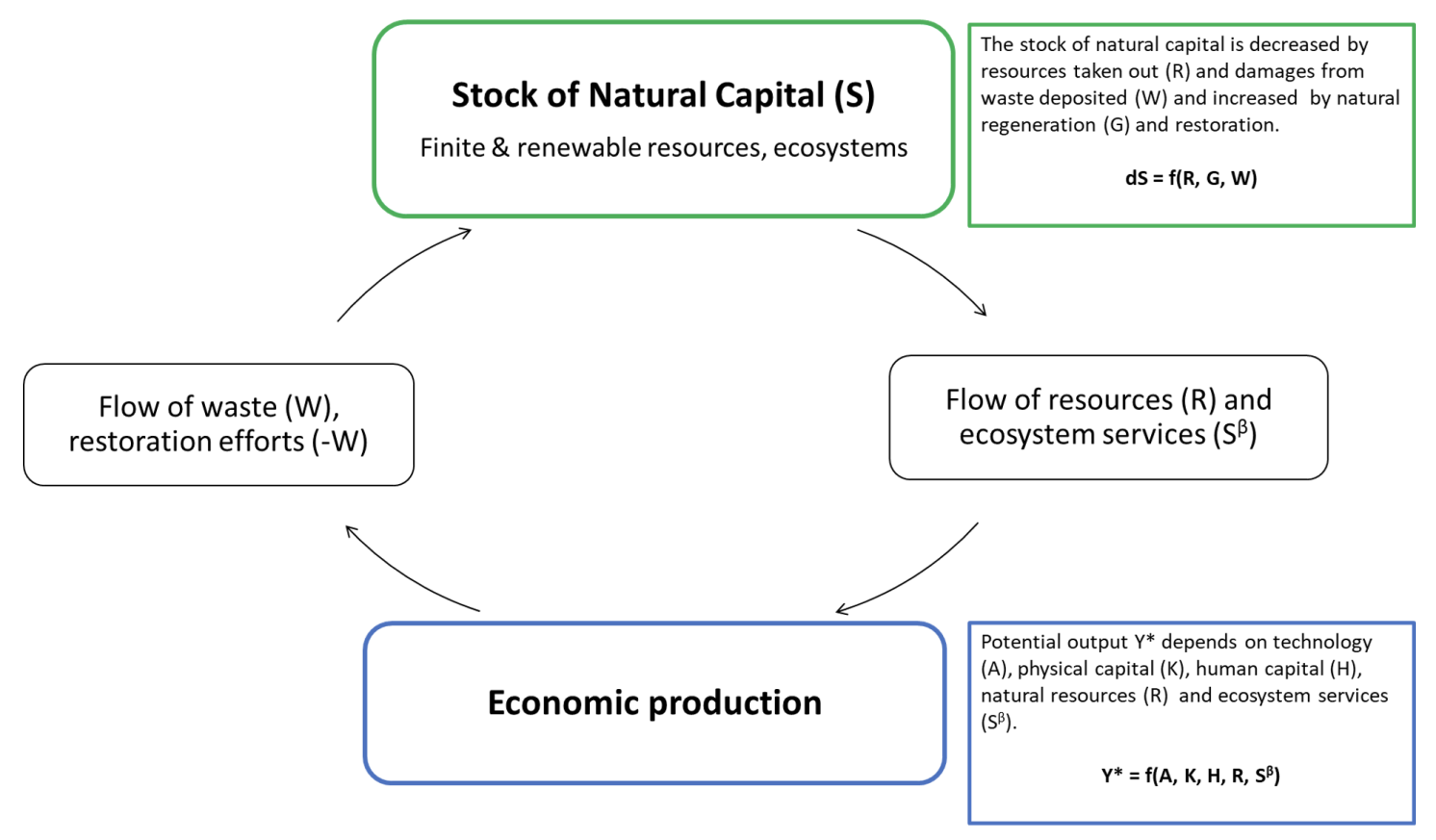
Source: European Commission, adaptation from Dasgupta (2021), Chapter 4*
The contribution of nature to economic activity is only partly reflected in traditional measures of economic output and standard macroeconomic models. This column summarises a recent workshop on “Natural Capital Measurement and Modelling” jointly organised by DG Economic and Financial Affairs, the Joint Research Centre of the European Commission, and the Output Gap Working Group of the EU’s Economic Policy Committee. The workshop discussed the measurement of natural capital, modelling the dependence of the economy on natural inputs, and possible policy implications....
more at CEPR
© CEPR - Centre for Economic Policy Research
Key

Hover over the blue highlighted
text to view the acronym meaning

Hover
over these icons for more information

Comments:
No Comments for this Article