By Dolphin, Duval, Sher, Rojas-Romagosa: Meeting the continent’s emission reduction targets could enhance energy security metrics by 8 percent by 2030—and that would be just the start
Russia’s invasion of Ukraine triggered Europe’s worst energy crisis since the 1970s and put energy security back at the top of the policy agenda.
Policymakers reacted swiftly by securing alternative natural gas supplies, improving energy efficiency, and expanding renewables. Reducing greenhouse gas emissions would, they said, not only mitigate climate change but also strengthen energy security. Skeptics, however, countered that this approach would increase the cost of energy, phase out safe (albeit dirty) domestic coal more rapidly, and ultimately weaken the continent’s energy security.
So, which view is correct? Our new research shows that boosting Europe’s climate action delivers sizable energy security benefits, too.
We weigh the effects of climate action on energy security in a global economic model with many countries and sectors. It simulates the impacts of policies to reduce emissions on two essential security measures.
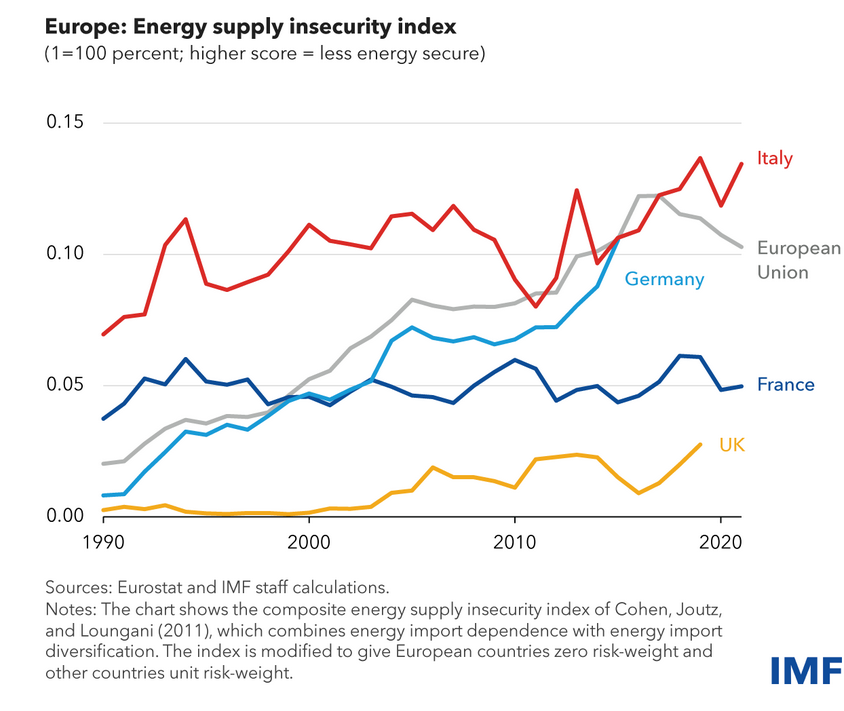
The first measure, security of supply, assesses the risk of a disruption to energy supply by combining how dependent a country is on imports for its energy consumption with how diversified those energy imports are. The second is the resilience of its economy to an energy disruption, represented by the share of gross domestic product it spends on energy.
Strikingly, our analysis reveals that Europe’s energy security deteriorated in the decades before Russia’s invasion of Ukraine, as countries relied increasingly on imports from ever fewer suppliers.
IMF
© International Monetary Fund
Key

Hover over the blue highlighted
text to view the acronym meaning

Hover
over these icons for more information

Comments:
No Comments for this Article