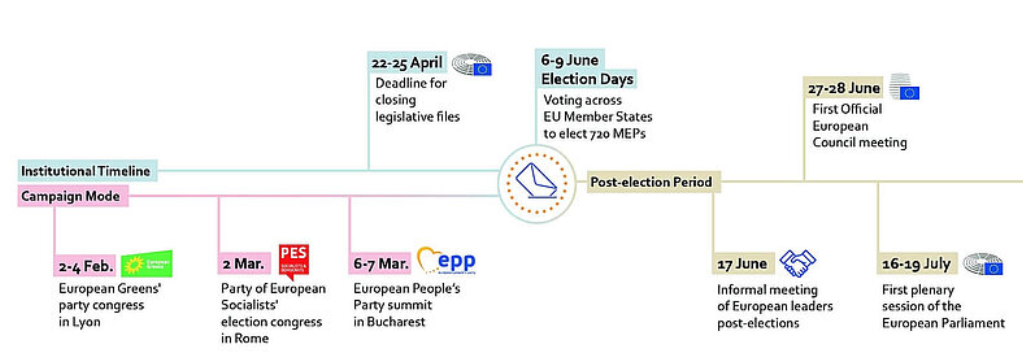
The brief provides an overview of how European political parties are approaching the election campaign. .. it discusses election day, possible new majorities in Parliament and inevitable institutional haggling over key positions. It gives a timeline of the dates for key EP and Council meetings.
he 2024 European elections could mark a turning point in EU politics: The European Parliament has traditionally been a progressive force in EU policymaking, often pushing for more far-reaching, European solutions than the Council. This dynamic could fundamentally change after the 2024 elections, with the current power balance expected to shift in favour of more right-wing forces. But even without a turn towards a Eurosceptic majority, the outcome will determine the direction of policies decided by the Parliament and shape EU politics over the next five years. This policy brief offers an overview of the need-to-know for this election year. First, it details the institutional timeline until the end of the current legislative cycle. Second, it provides an overview of how European political parties are approaching the election campaign. Third, it discusses election day, possible new majorities in Parliament and inevitable institutional haggling over key positions. Finally, it describes the missed reform opportunities since the 2019 elections and how this may undermine the integrity of the June poll.
Introduction
2024 is set to be the biggest election year in history with more than half of the world’s population heading to the polls. These include the European Parliament elections from 6 to 9 June, when more than 400 million eligible voters can choose the 720 members of the EU’s only directly elected institution for the tenth time since 1979. They matter greatly: The Parliament is a co-legislator on all files of Union competency, has the power to approve the EU’s budget and the future European Commission.
At this year’s elections, the stakes are high as some polls suggest that right�wing, Eurosceptic parties will make sizeable gains. This could shift the EU’s power balance significantly: The European Parliament has traditionally been a progressive force in policymaking, often pushing for more far-reaching, pan�European solutions than Member States in the Council. With a new centre-right and far-right majority coalitions possible after the election, the Parliament could go from championing pro-European initiatives to blocking them. But even in the absence of a shift towards a Eurosceptic majority, the outcome will determine the direction of the policies decided by Parliament and shape EU politics over the next five years.
This policy brief offers an overview of the need-to-know for this politicized election year. First, it details the institutional timeline until the end of the current legislative cycle and what files policymakers are still trying to close. Second, it provides an overview of the election campaigns of European political parties. Third, it discusses election day, possible new majorities in Parliament and the subsequent division of top jobs. Finally, it describes the missed reform opportunities since the last European elections and how this may undermine the integrity of the process....
full paper
more at Delors Centre
© Jacques Delors Centre
Key

Hover over the blue highlighted
text to view the acronym meaning

Hover
over these icons for more information

Comments:
No Comments for this Article